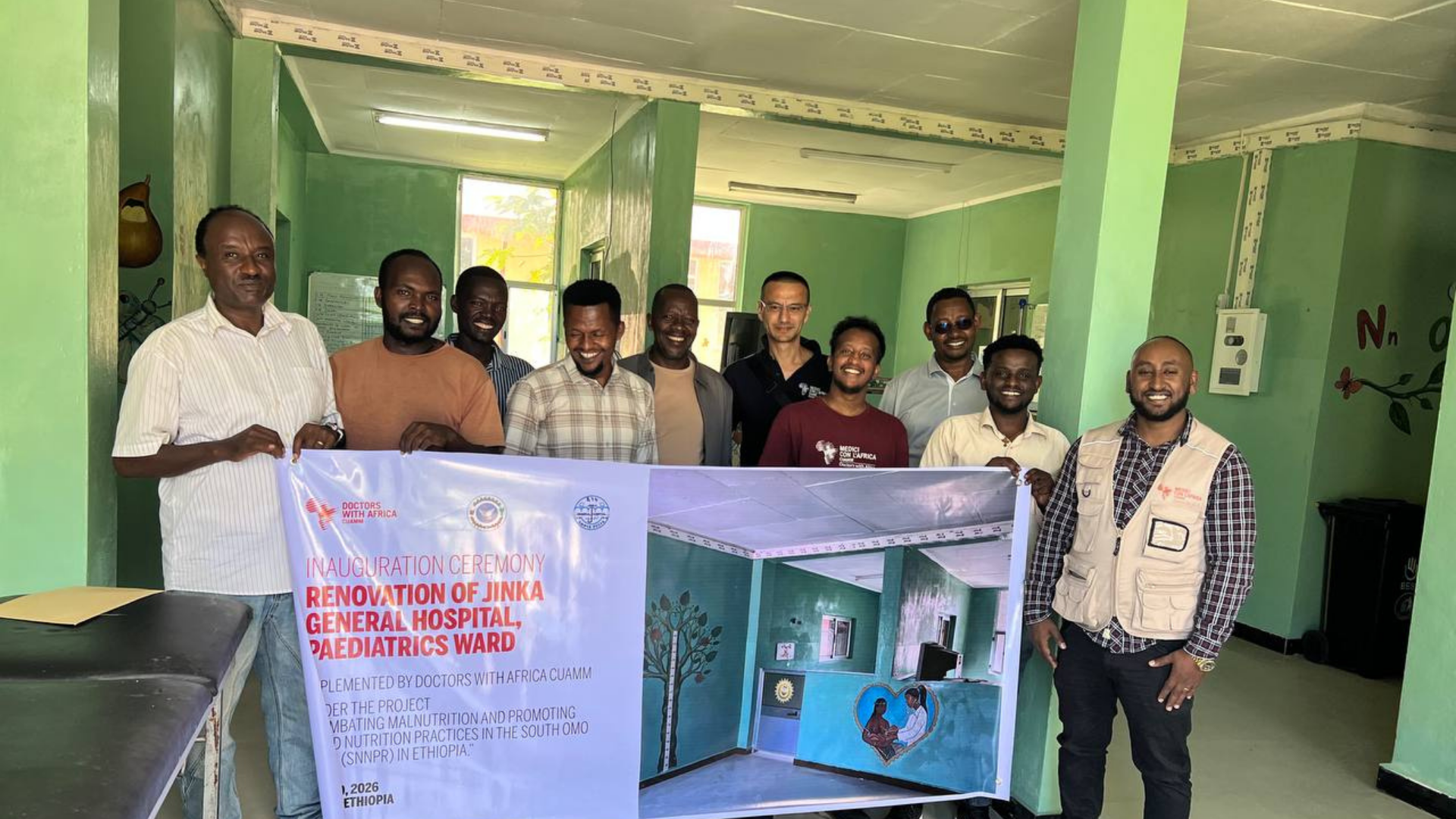
Providing safer care in dignified and functional environments: this was the goal of the rehabilitation works recently completed and inaugurated at Jinka General Hospital in southern Ethiopia, a key referral facility for the entire South Omo Zone.
This tangible intervention has significantly strengthened the hospital’s pediatric ward, maternity waiting home, and essential support infrastructure as part of the project “Combating Malnutrition and Promoting Good Nutritional Practices in the South Omo Zone (SNNPR), Ethiopia,” funded by the Italian Prime Minister’s Office through the eight per thousand (8×1000) income tax allocation scheme.
Today, mothers and children in Jinka can rely on safe, welcoming environments better equipped to meet their healthcare needs, resulting in a concrete improvement in the quality of care provided.
Beyond the structural upgrades, the intervention has a direct impact on daily healthcare delivery through strengthened infection prevention and control (IPC) measures, improved use of space, and the restoration of water, sanitation, and hygiene services—essential elements for ensuring continuity and safety of treatment.
Specifically, the works included the renovation of roofs and ceilings, maintenance of electrical systems, replacement of doors, windows, and sanitary fixtures, construction of new walkways, and improvements to the drainage system. To address shortages in basic resources, a new water supply system with a 10,000-liter storage tank was installed, and two new kitchens were built to serve the pediatric ward and the maternity waiting home. The rehabilitation was carried out alongside the installation of a wall-mounted oxygen distribution system by another organization, helping make the hospital as functional and efficient as possible.
“In the rehabilitated facilities, the environment is now safer, cleaner, and more comfortable,” explains Yordanos Hailegiorgis, Cuamm’s logistics officer. “Although the Marburg outbreak initially delayed the works, we succeeded in completing them.”
The result is more than an infrastructure achievement; it is a meaningful transformation that directly improves the lives and future prospects of the hospital’s most vulnerable patients.