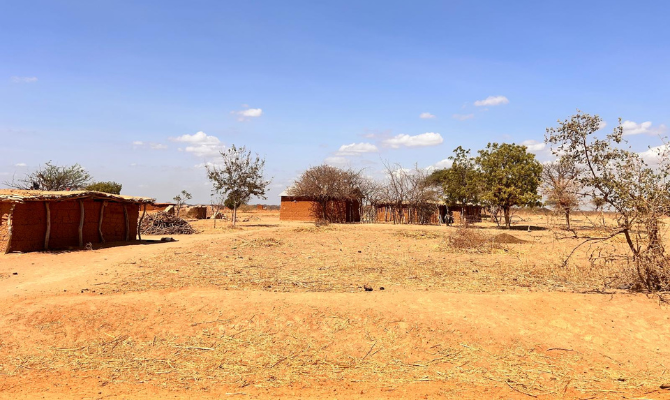
Pili Mtundu has twelve children. She lives with her husband and children in the village of Mlodaa, in the Chamwino District of Tanzania. A simple two-room house accommodates the entire family. Daily life revolves around agriculture, which provides the family’s main livelihood. Both parents care for the children with dedication and can rely on the support of the community and local leaders.
However, something changed with the birth of the youngest members of the family: three twins. Bahati, Shukrani, and Baraka were born at 36 weeks of gestation with very low birth weights: 1.5 kg, 1.5 kg, and 2 kg. Pili breastfed them and gradually introduced complementary feeding, mainly consisting of cereal porridge. But at 15 months, the condition of the three children rapidly deteriorated. Admitted to the Chamwino district hospital, the health staff diagnosed them with severe acute malnutrition, accompanied by diarrhea and vomiting. For 14 days, the three twins were treated at the Intensive Treatment Centre (ITC).
The cause of this situation was not a lack of food. In fact, acute forms of malnutrition are not always linked to extreme poverty, but often to a lack of awareness of which nutrients are essential for healthy growth in early childhood. In the Mtundu family’s case, the daily diet was based almost exclusively on what was produced in the fields: cereals and nuts, with very little dietary diversity.
For Bahati, Shukrani, and Baraka, the recovery journey did not end with the most critical phase. After being discharged from the ITC, the children continued outpatient treatment with weekly check-ups. Meanwhile, an equally important initiative took shape: nutritional education for the family. Through home visits and ongoing dialogue with health workers, Pili and her husband received guidance on infant nutrition, hygiene, water use, and infection prevention. It was not only about what to eat, but also how and when to do so, especially during the crucial early years. This initiative was made possible by the project “Diverse Food System: Improving Nutrition by Supporting a Diverse and Sustainable Food System,” supported by the Italian Agency for Development Cooperation (AICS) and the Zanetti Foundation.
Thanks to continuity of care and changes in daily habits, Bahati, Shukrani, and Baraka recovered and can now grow up healthy with their family. Their story highlights the central role of prevention and nutritional education as an integral part of child health.